From Portuguese barrels and Basque rivermouths to Irish slabs and Canary Island reefs — the waves that make Europe a surf continent in its own right.
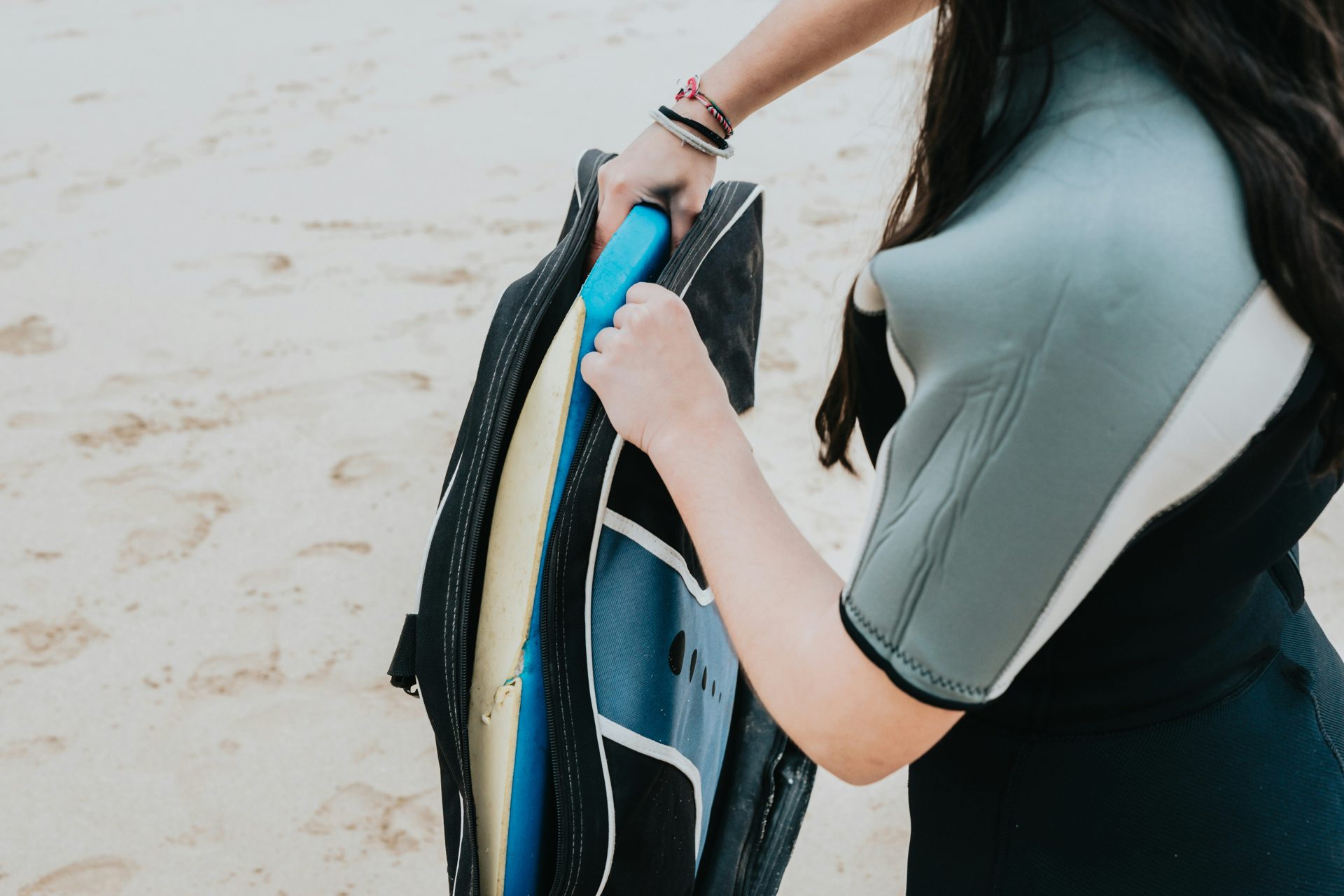
Woman in a wetsuit getting her board ready
Dress for the water temperature, not the air — and get the thickness right. Photo: A C 3xnno3 / Unsplash
Wetsuit thickness is measured in millimeters and is often written as two numbers, such as 4/3mm, indicating the neoprene thickness around the torso and the limbs.
Choose your wetsuit primarily based on water temperature, not air temperature. As a guide: 24°C and above, boardshorts or a swimsuit; 19 to 23°C, a 2mm top or shorty; 16 to 19°C, a 3/2mm full suit; 12 to 16°C, a 4/3mm with boots; 8 to 12°C, a 5/4mm with boots, gloves and a hood; below 8°C, a 6/5mm with thick boots, gloves and a hood. The colder the water, the thicker the suit.
A classic beginner mistake is choosing a wetsuit based on air temperature. On a sunny 25°C day, the water can still be 14°C, cold enough to leave you shivering within twenty minutes in boardshorts.
Wetsuits provide insulation through their neoprene material while limiting the circulation of cold water against your skin. The right thickness helps retain body heat, keeping you comfortable and conserving energy during longer surf sessions. Use this wetsuit thickness guide as a starting point, then check the water temperature, season and local conditions at your destination before choosing your wetsuit: seasonal water temperatures are listed on every Wave Safari destination and spot page.
Wetsuit thickness is written as two numbers, like 4/3mm. The first number indicates the thicker neoprene around your core for warmth and insulation, while the second indicates the thinner neoprene used around the arms and legs to improve flexibility and freedom of movement.
Use this temperature guide as a starting point for choosing the right wetsuit thickness:
Neoprene thickness affects more than warmth. Thicker wetsuits provide greater thermal protection and insulation, but they can reduce flexibility and require more energy to paddle and move. Thinner suits offer greater freedom of movement and may improve performance in warmer water, but provide less protection from the cold. The goal is to balance warmth, comfort and flexibility for the conditions you'll be surfing in.
This is guide, not a law. Choose a thicker wetsuit if you feel the cold easily, surf long sessions or spend a lot of time sitting between waves. Choose a thinner option if you naturally run warm or surf actively in sheltered conditions.
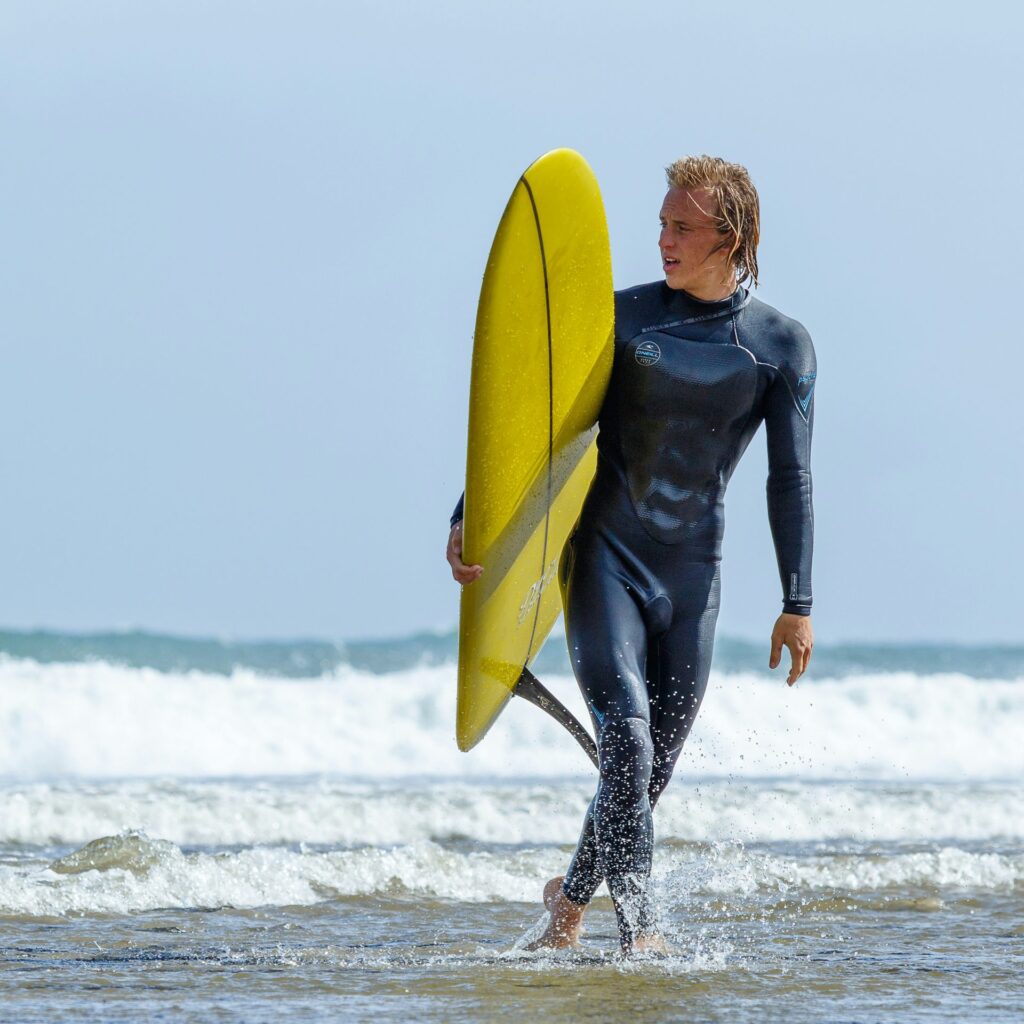
Surfer in a full wetsuit heading out with a boardThe right wetsuit keeps you in the water for hours. Photo: Terrell Woods / Unsplash
If you surf across a range of temperate destinations and seasons, these are the two wetsuits to consider first. A 3/2mm is the global all-rounder, ideal for water temperatures of around 16 to 19°C — think European summers, much of the Mediterranean, or Morocco during the cooler months. A 4/3mm handles colder water temperatures of around 12 to 16°C, common across many European surf destinations in autumn and winter, and is often paired with boots. Many traveling surfers own a 3/2mm and rent thicker suits when they head somewhere cold.
Your extremities are especially vulnerable to the cold, and cold hands or feet can cut a surf session short. As a rule of thumb, consider adding 3mm boots once the water drops below about 14°C, and gloves and a hood below about 10°C. Boots also protect your feet on sharp reefs and rocky entries, even in warm water, so many surfers pack a thin pair regardless of temperature.
The right wetsuit thickness only works if the suit fits properly. A wetsuit should fit like a second skin: snug across the torso, shoulders, arms and legs without restricting your breathing or movement. A loose fit allows too much water to circulate through the suit, reducing warmth and insulation.
Before choosing your wetsuit size, take accurate body measurements and compare them with the manufacturer's size chart. Sizing can vary between brands, so don't rely on your usual clothing size alone. A good fit improves comfort, thermal performance and flexibility in the water.
The right balance also helps maintain muscle warmth and reduce fatigue, while wearing a suit that's too thick for the conditions can lead to overheating and unnecessary restriction.
If you mostly surf one region, buy a wetsuit suited to your local water temperatures and add a thicker or thinner one as needed. If you travel widely, owning a single 3/2mm and renting thicker suits at cold-water destinations is often cheaper and makes it easier to travel light than packing a wetsuit for every climate. Many surf houses and surf camps rent quality wetsuits, and you can check their listed amenities on Wave Safari before you travel.
Use this wetsuit thickness guide based on water temperature, then adjust for session length, wind conditions and your personal tolerance to cold. Roughly: boardshorts above 24°C, a 2mm or shorty for 19 to 23°C, a 3/2mm for 16 to 19°C, a 4/3mm with boots for 12 to 16°C, a 5/4mm with boots, gloves and hood for 8 to 12°C, and a 6/5mm below 8°C. Choose a thicker option if you feel the cold easily or plan longer sessions.
The two numbers indicate the neoprene thickness in millimeters: 4mm around the core for warmth and 3mm on the arms and legs for flexibility. Thicker cores keep you warmer; thinner limbs let you paddle more easily.
A 3/2mm wetsuit is suited to warmer temperate water (about 16 to 19°C) and offers greater flexibility, while a 4/3mm provides more insulation in colder water (about 12 to 16°C) and is often paired with boots. Many surfers own a 3/2mm and rent or buy a 4/3mm for colder trips.
Always the water temperature. Air temperatures can be warm even when the water is cold enough to chill you quickly. Check the water temperature for your destination and season before choosing a suit.
As a general guide, consider 3mm boots when the water drops below about 14°C, and gloves and a hood below about 10°C, to help maintain warmth during colder sessions. Boots are also worth packing for sharp reef entries in any temperature.
Check seasonal water temperatures on every Wave Safari destination page, and find surf houses that rent wetsuits so you can choose the right gear and pack light.
Right rubber, longer sessions. Stay warm and stay out there.
From Portuguese barrels and Basque rivermouths to Irish slabs and Canary Island reefs — the waves that make Europe a surf continent in its own right.
Great waves don't have to cost a fortune. Seven destinations where your money buys more time in the water.
Barrel, offshore, goofy, set — decode the language of the lineup so you sound like you belong
From a vague urge to chase waves to a booked trip that actually delivers. Here's the order to do it in.
The ocean has rules nobody prints on a sign. Learn them and you'll be welcome anywhere.
Everything you need to bring for your next surf trip, including the small surf trip essentials first-timers always forget.
Why some waves are gentle and others are heavy comes down to what's under the water. Here's how to read them.
What beginner, intermediate and advanced really mean in the water — and how to know which one you are.
Why timing matters more than destination — and how to find good waves somewhere in the world every month.
Not a hotel, not quite a hostel: is where surf trips actually happen. Here's what makes one.