From Portuguese barrels and Basque rivermouths to Irish slabs and Canary Island reefs — the waves that make Europe a surf continent in its own right.
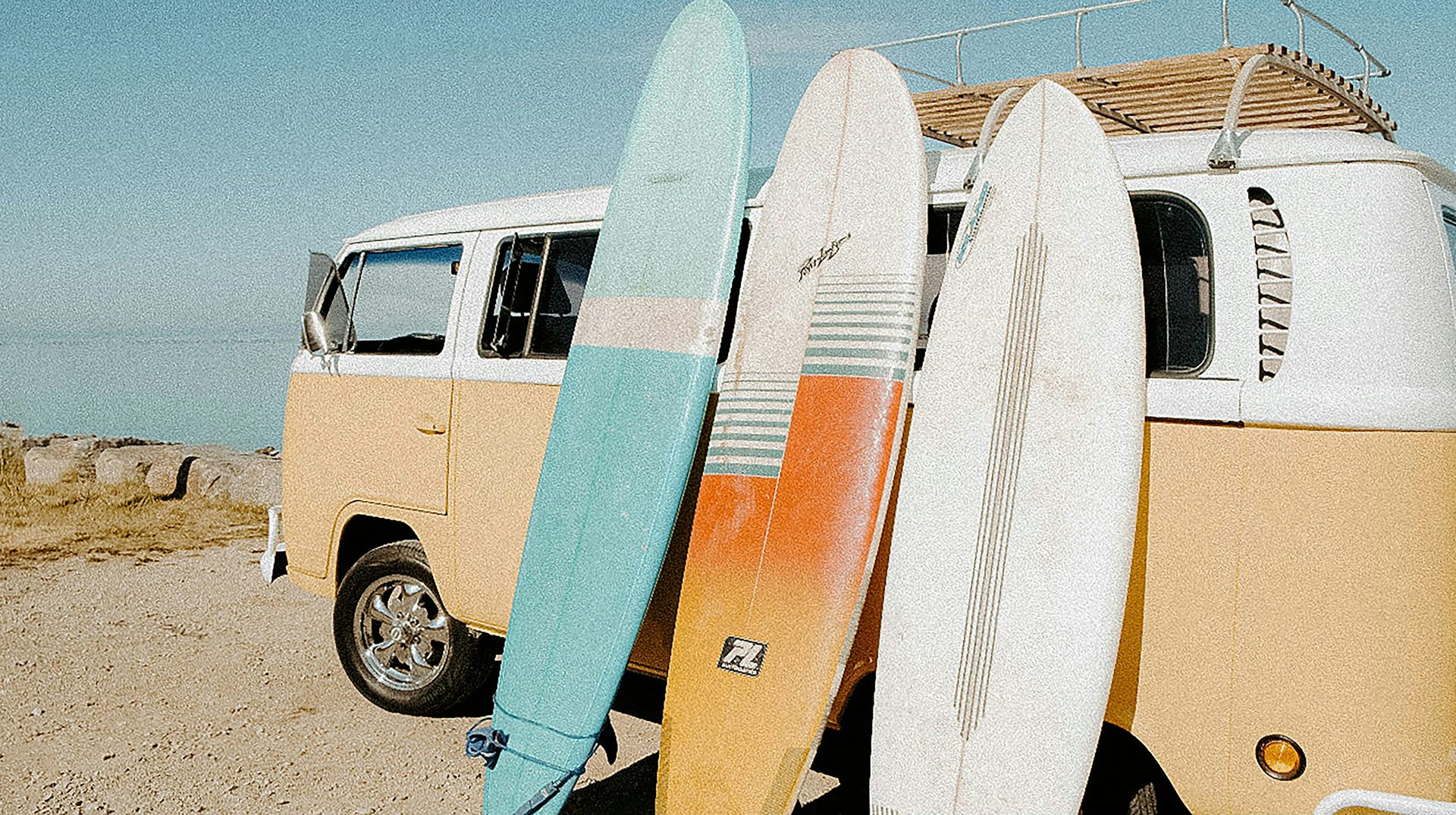
Surf van loaded with boards
Load the boards — the journey is half the trip. Photo: Amanda Vick / Unsplash
If you want to know how to plan a surf trip, follow these steps:
(1) decide when you can travel;
(2) find surf destinations that are in season and match your skill level;
(3) choose a specific region or town with the right surf spots and wave types;
(4) decide where to stay - a surf camp for structure or a surf house for flexibility;
(5) sort out flights, transport and other logistics;
(6) pack the right surf gear for the destination's water temperature and conditions.
Choosing the season first, not the destination, is the single most important step.
Most people plan a surf trip backward. They fall for a photo of a perfect wave, book flights, and arrive to find the spot flat, blown out or missing the right swell because they've chosen the wrong time of year. Flip it.
Start with when you can go, find the surf destinations that offer the best conditions during that period, and choose from those options. Season is the starting point, but swell direction, tides and local surf forecasts will determine which spots work best once you're there.
This one change is the difference between a trip that scores and an expensive disappointment. Our guide to the best time to surf explains the seasons region by region.
On Wave Safari, every destination lists its best season, the skill levels it suits and the surf spots nearby, so you can plan in the right order from the start.
Begin with the two things that shape the entire trip: when you can travel and your current surf skills. Block out your realistic dates, then assess your skill level honestly — beginner, intermediate or advanced. Both decisions shape everything that follows. A beginner and an advanced surfer traveling in January may need very different destinations. If this is your first surf trip, be realistic about the kind of surfer you are and the conditions you're comfortable paddling out in.
If you're unsure of your level, our surf levels guide will settle it.
Now find destinations that are in season during your dates and suit your level. As a rough guide, November to March can bring great waves to parts of Europe's Atlantic coast, Hawaii and Central America, while April to October is prime season for many destinations in Indonesia, Sri Lanka and the Indian Ocean. Remember that surf seasons vary between the Northern and Southern Hemispheres, so always check local conditions before booking.
Beginner tip: warm-water surf and mellow beach breaks make learning far easier. Portugal in summer, Costa Rica, Sri Lanka's south coast in the dry season and Bali's beginner beaches are classic first-trip choices.
Once you have a country, zoom in. Most countries have several surf regions with different surf breaks, wave types, crowds and local conditions.
Pick a town or stretch of coast with breaks that match your level. Look at the wave type, swell direction, tide requirements and bottom: a mellow beach break and a powerful reef break can offer completely different surfing experiences even within the same region.
This is where many trips are won or lost: a beginner who bases themselves near an expert-level reef break will have a miserable week, while one at a gentle beach-break town will improve every day.
Browse the spots in your chosen region on Wave Safari, filter by level and break type, and make sure there are waves you can actually surf nearby.
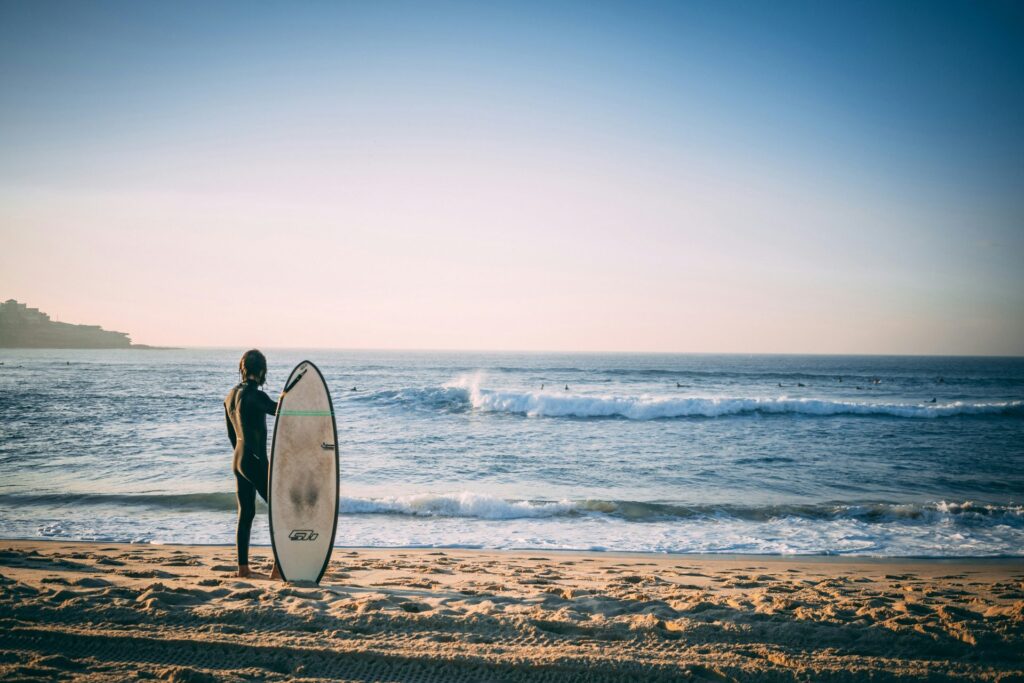
Surfer standing at the shoreline looking outPicture the destination, then plan backward from the season. Photo: Alex King / Unsplash
Your accommodation sets the tone of the whole trip. The main choice is between a surf camp and a surf house.
A surf camp bundles surf lessons or guiding, accommodation and a social experience into one package — ideal for beginners, solo travelers and anyone who wants it all organized.
A surf house is a more flexible, laid-back base with local character, better if you want freedom, independence and a closer connection to the local surf scene. Our guides to surf camps and surf houses cover the difference in detail.
With the destination and base set, book flights — midweek and shoulder-season fares are usually cheaper. Then plan how you'll get around.
Ease of travel matters too: a destination with great waves can become frustrating if reaching each surf spot requires hours of driving or complicated transfers. In remote destinations, reaching the best surf spots may require a boat trip, while elsewhere a rental car, camp shuttle or scooter is enough.
Check visa requirements, and buy surf-specific travel insurance, or check that your policy explicitly covers surfing.
Set a realistic budget for the entire trip, not just flights and accommodation. Factor in board rental or airline board fees, local transport, surf lessons or guiding, food and insurance. Sometimes paying a little more for the right location gives you better bang for your buck by increasing your wave count and reducing time spent traveling between spots.
Finally, pack for your chosen destination's water temperature, climate and surf conditions, not from a generic list. Check whether your accommodation provides surfboards, wetsuits and other surf gear - many do, allowing you to travel light - then use our surf trip packing list to cover the essentials and the easy-to-forget extras. Depending on the destination, you may need to bring your own surfboard, board bag, leash, fins, reef-safe sunscreen, first-aid kit and board shorts, or you may be able to rent most of your gear locally. Match your wetsuit to the water with our thickness guide.
Leave room for flexibility. Surf forecasts change, swells arrive early or late, and tides can make the perfect spot work for only a few hours. Don't plan every surf session before you arrive — use local surf knowledge and current forecasts to adapt your plans and maximize your wave count.
Start with your travel dates and skill level, then find an in-season destination with warm water and mellow beach breaks. Choose a town with beginner-friendly waves and a surf camp or surf school that includes surf lessons, boards and transport. Planning around the season first is the key.
Dates first. Decide when you can travel, then find destinations that are in surf season during that window. Picking a destination before checking its surf season is one of the most common reasons surfers arrive to find flat or blown-out conditions.
For peak season and popular surf camps, book two to three months ahead to get the best accommodation and fares. For off-peak trips and flexible surf-house stays, booking a few weeks ahead can be enough. Flights are usually cheapest midweek and outside school holidays.
It varies widely by destination and style. Affordable destinations like Morocco, Portugal and Sri Lanka can cost from around €40 to €80 a day including a surf camp, while premium destinations and boutique stays cost much more. Flights and how you get around are the other big factors.
No. If you can't surf yet, choose a beginner-friendly destination with mellow beach breaks and book surf lessons through a reputable surf school or surf camp. Your first surf trip can be the perfect opportunity to build basic surf skills, work on your pop-up and spend consistent time in the water.
Start with the season and let the coastline guide you. Explore surf destinations, surf spots and surf houses on Wave Safari. Plan your next surf trip around the waves, local culture and kind of experience you're looking for.
Plan it in the right order and the only surprise left is how good the waves are. See you out there.
From Portuguese barrels and Basque rivermouths to Irish slabs and Canary Island reefs — the waves that make Europe a surf continent in its own right.
Great waves don't have to cost a fortune. Seven destinations where your money buys more time in the water.
Barrel, offshore, goofy, set — decode the language of the lineup so you sound like you belong
The right wetsuit keeps you in the water longer. Here's exactly what to wear, by degree.
The ocean has rules nobody prints on a sign. Learn them and you'll be welcome anywhere.
Everything you need to bring for your next surf trip, including the small surf trip essentials first-timers always forget.
Why some waves are gentle and others are heavy comes down to what's under the water. Here's how to read them.
What beginner, intermediate and advanced really mean in the water — and how to know which one you are.
Why timing matters more than destination — and how to find good waves somewhere in the world every month.
Not a hotel, not quite a hostel: is where surf trips actually happen. Here's what makes one.