From Portuguese barrels and Basque rivermouths to Irish slabs and Canary Island reefs — the waves that make Europe a surf continent in its own right.
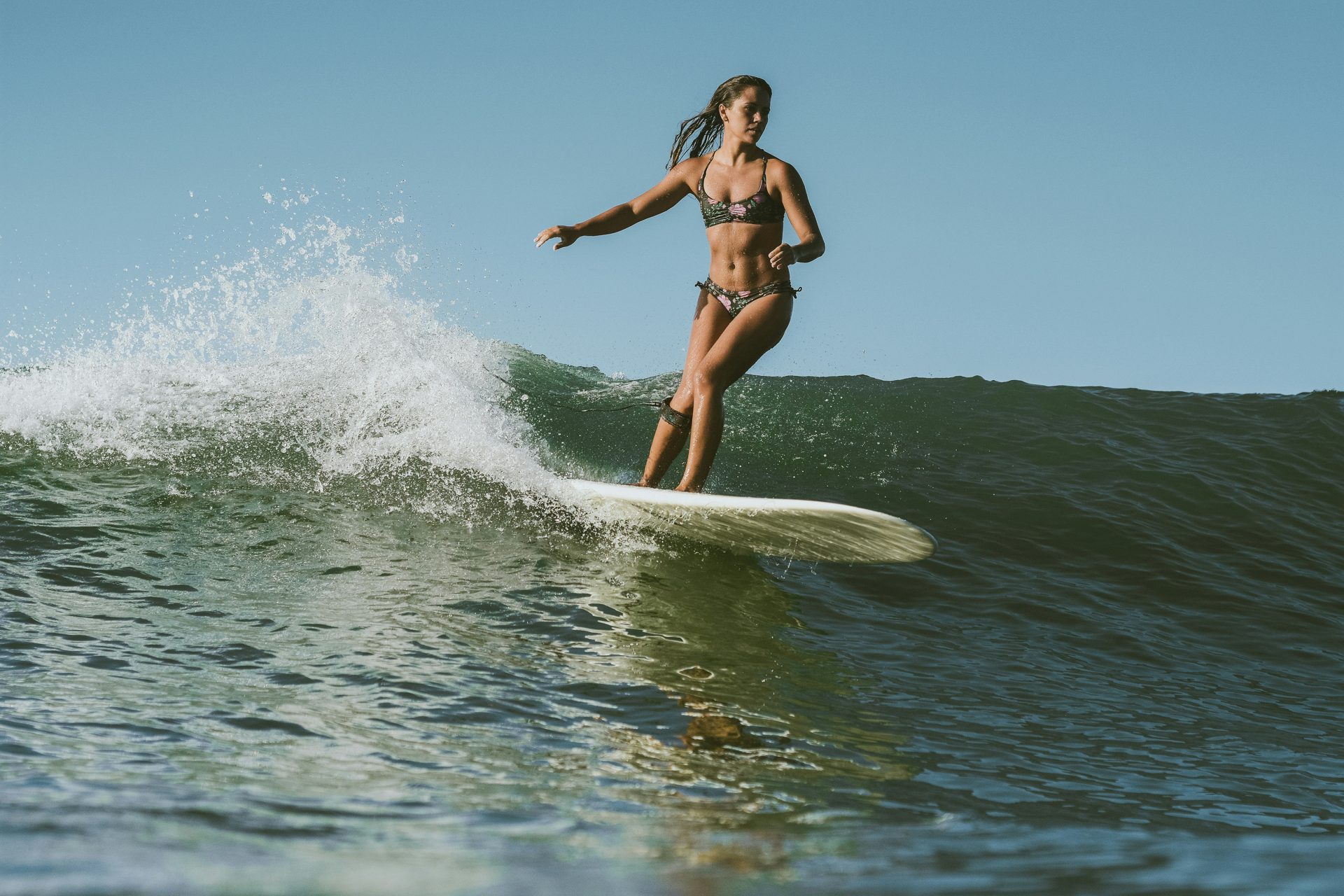
Warm water, a gentle wave and the grin that hooks you for life. Photo: Fellipe Ditadi / Unsplash
Surfing is the skill of riding a breaking wave on a board. To learn, you start in small whitewater on a large, stable soft-top board, practice paddling and the pop-up (going from lying down to standing in one motion), then progress to catching unbroken green waves. Most people stand up in their first week with good conditions and a little coaching. The fastest, safest way to learn is a beach break with sandy bottom, small waves and a qualified instructor or surf camp.
Everyone wipes out. The surfers gliding across the bay made the same flailing pop-ups you're about to make. The difference is hours in the water. Surfing rewards patience more than athleticism, and the learning curve is steep at the start and endlessly fun afterward. Set your expectations correctly — your first goal is not to ride a barrel, it's to stand up in whitewater and feel the glide. That feeling is the hook.
This guide walks you through the gear, the technique and the conditions that get you standing fastest, plus the mistakes that keep beginners stuck. On Wave Safari, we've mapped beginner-friendly spots and surf houses worldwide, so when you're ready to plan a trip you can find the gentle sandy beaches that make learning easy.
The single biggest beginner mistake is starting on a board that's too small. Volume and stability are your friends. Learn on a soft-top (foamie) longboard, ideally 7 to 9 feet. The extra foam floats you, paddles faster, catches waves earlier and forgives mistakes. Short boards look cool and feel impossible for the first few months.
Water temperature decides what you wear, not air temperature. Cold water saps energy fast, and a cold, distracted beginner learns slowly. If the water is below about 20°C you'll want a wetsuit. Our wetsuit thickness guide breaks down exactly what to wear by temperature, but as a rule: boardshorts or a swimsuit in the tropics, a 3/2mm suit in temperate water, and a 4/3mm with boots in cold European or North American winters.
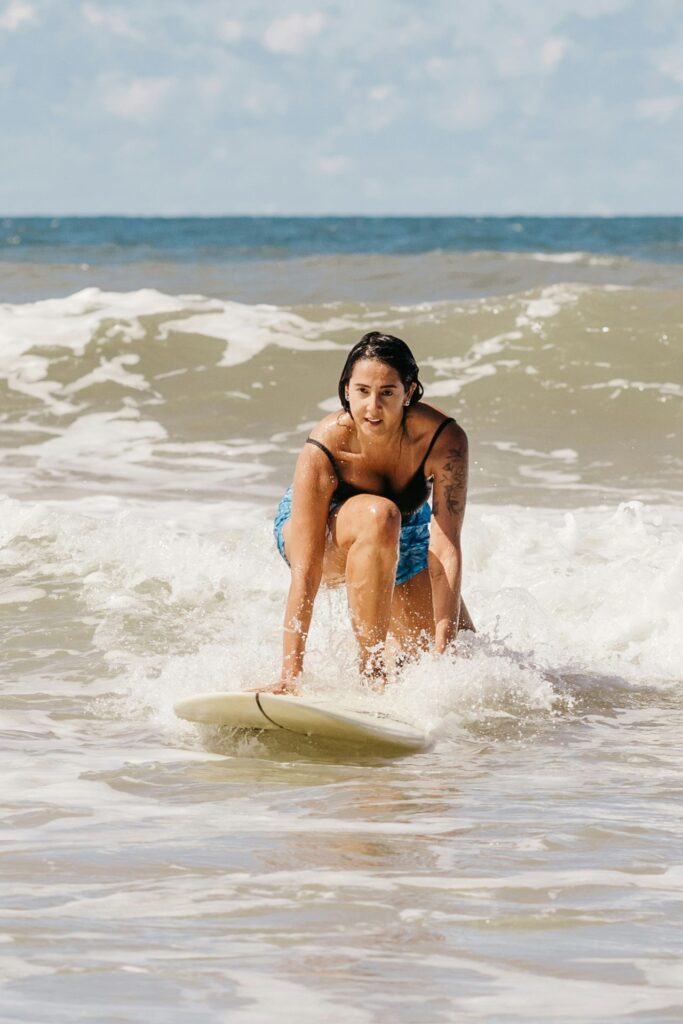
Warm water, a gentle wave and the grin that hooks you for life. Photo: Fellipe Ditadi / Unsplash
The pop-up is the move that takes you from lying on the board to standing. Drill it on dry land before you ever paddle out. Lie on the board, hands flat under your chest, then in one explosive motion push your chest up, swing your back foot forward and plant your feet, landing in a low, balanced stance with knees bent and eyes up.
Common mistake: standing up in stages — knee first, then feet. It feels safer but it kills your balance. Train the single-motion pop-up from day one.
Start in the whitewater — the foam left after a wave has broken. It's gentle, forgiving and where every surfer begins. Point the board straight at the beach, lie centered (not too far forward or you'll nosedive, not too far back or the board won't move), and paddle with long, deep strokes as the foam reaches you. When you feel the push, take two more strong strokes, then pop up. Stand, glide, smile, fall off, repeat.
Before you progress to green (unbroken) waves, learn to read the water. Spend five minutes watching from the beach every session. Where are the waves breaking? Where is the calm channel surfers use to paddle out? Which way is the current moving? This habit makes you safer and helps you catch more waves for less effort.
Waves break where the water shallows. A consistent breaking point usually means a sandbar, reef or point. The calmer, deeper water beside it is often a channel — a safer place to paddle out and a faster way back to the lineup.
Rips are channels of water flowing back out to sea. They can pull a beginner out fast. If you're caught in one, don't fight it — paddle parallel to the beach until you're out of the flow, then come in. Always check conditions and ask a local or lifeguard if you're unsure.
Conditions matter more than effort. Trying to learn on a heavy reef break is like learning to drive on a motorway. Look for a beach break with a sandy bottom, small and gentle waves, a gradual slope and ideally lifeguards or a surf school. Warm, beginner-friendly destinations like Portugal's Peniche, Costa Rica's Tamarindo, Sri Lanka's Weligama and Bali's Canggu have made entire economies out of teaching people to surf.
Browse beginner-friendly destinations and surf houses on Wave Safari to find a base with gentle waves, lessons and board rental in one place.
With decent conditions and a few lessons, most people stand up and ride whitewater within their first three to five sessions. Catching and riding green waves typically takes a few weeks to a few months of regular surfing. Becoming genuinely competent — reading waves, choosing the right one, riding along the face — is a journey of years. That's the point. Surfing is a sport you never finish learning.
Yes, but lessons dramatically speed up the process and keep you safe. A good instructor fixes your pop-up, puts you in the right spot and teaches you to read currents — things that take months to learn alone. If you teach yourself, start in small whitewater on a soft-top longboard and never surf alone as a beginner.
Book a few days at a beginner surf camp in a warm, gentle beach-break destination. You get the right board, daily coaching, the correct conditions and other beginners to learn alongside. It compresses months of trial and error into a week.
You don't need to be an athlete, but paddling uses muscles most people rarely train. Basic swimming ability and comfort in the ocean are essential. Fitness builds quickly once you start, and a stronger paddle means more waves.
Surfing is safe when you respect the ocean and your limits. The main risks for beginners are rip currents, your own board and surfing in conditions that are too big. Learn in small waves, with others around, and check conditions before every session.
Don't start on a short board, don't paddle out into a crowded lineup of experienced surfers, don't surf alone, and don't ignore rip currents or local advice. Stay in the whitewater until your pop-up is reliable.
Ready to catch your first wave? Explore beginner-friendly surf spots and surf houses on Wave Safari and find the gentle sandy beach where your surfing story starts.
The hardest part is paddling out the first time. After that, you're a surfer. See you in the water.
From Portuguese barrels and Basque rivermouths to Irish slabs and Canary Island reefs — the waves that make Europe a surf continent in its own right.
Great waves don't have to cost a fortune. Seven destinations where your money buys more time in the water.
Barrel, offshore, goofy, set — decode the language of the lineup so you sound like you belong
From a vague urge to chase waves to a booked trip that actually delivers. Here's the order to do it in.
The right wetsuit keeps you in the water longer. Here's exactly what to wear, by degree.
The ocean has rules nobody prints on a sign. Learn them and you'll be welcome anywhere.
Everything you need to bring for your next surf trip, including the small surf trip essentials first-timers always forget.
Why some waves are gentle and others are heavy comes down to what's under the water. Here's how to read them.
What beginner, intermediate and advanced really mean in the water — and how to know which one you are.
Why timing matters more than destination — and how to find good waves somewhere in the world every month.