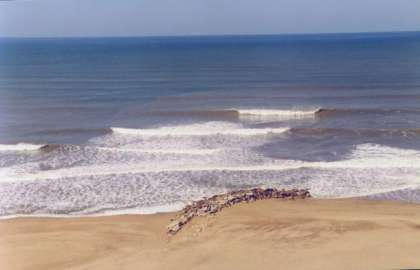
La Paloma Surf Spot Guide, Argentina
Nestled along dramatic cliffs near Mar del Plata, La Paloma delivers a powerful right-hand reef break that fires up with hollow sections and long walls when the conditions align. This rocky bottom spot demands respect for its punchy tubes and steep takeoffs, creating an exhilarating vibe for those who crave challenging waves with stunning cliff-top views. It's a surfer's reward after navigating the rugged access, offering sessions that test skill and leave you buzzing.
Geography and Nature
La Paloma sits in the Los Acantilados area, about a 20 to 25-minute drive from Mar del Plata's town center in Buenos Aires Province, along Argentina's exposed Atlantic coastline. The spot features towering 30-meter cliffs overlooking a rocky reef-lined shore with minimal beach space, especially at high tide, surrounded by gravelly sands and rugged coastal terrain. This remote-feeling zone contrasts with nearby urban beaches, providing a wild, natural backdrop ideal for focused surf missions.
Surf Setup
La Paloma is a classic reef break firing primarily right-handers, with occasional lefts on bigger swells, known for its powerful tubes especially in the first hollow section followed by maneuverable walls up to 200 meters long. It thrives on southeast to south swells between 170 and 190 degrees with periods over 12 seconds and heights of 2 meters or more, paired with offshore northeast to northwest winds that groom the face perfectly. Low to rising tides work best to hold shape over the flat rock bottom, while a typical session expects fast lines, heavy water, and occasional double-overhead sets that demand precise positioning.
Consistency and Best Time
This exposed reef break offers dependable surf from groundswells, with autumn (March to May) and winter (June to August) delivering the cleanest, most powerful waves alongside spring peaks in November to December. February sees good surf about 60 percent of the time, but avoid summer months (December to February) when swells drop small and onshore winds dominate. Time your trip for southeast swells over 2 meters with long periods for peak performance.
Crowd Levels
Weekdays bring few surfers for uncrowded sessions, while weekends draw more locals and visitors, creating a busier lineup. The mix stays mellow with waves to share.
Who It's For
La Paloma suits experienced and advanced surfers due to its rocky bottom, powerful tubes, and steep drops that punish mistakes. Beginners should steer clear, as intermediates might catch smaller days for practice but will find the heavy sections overwhelming. Advanced riders score epic barrels and carves on good swells, making it a rewarding challenge.
Hazards to Respect
Watch for flat rocks on the bottom, strong northward rips at the right's end, and slippery steep paths down the cliffs for access - paddle out carefully from behind on the right. High tides limit beach space, so time entries to avoid getting caught against the cliffs.
Water Temperature and Wetsuit Guide
Summer (December to February) water temperatures range from 16 to 20°C; a 3/2mm wetsuit provides comfort for longer sessions. Winter (June to October) drops to 8 to 13°C, requiring a full 4/3mm wetsuit with boots and hood. Spring and fall average 13 to 16°C, where a sealed 3/2mm or 4/3mm wetsuit works well depending on air temps.
How to Get There
Fly into Mar del Plata Airport (MDQ), about 15 kilometers from La Paloma, then rent a car for the straightforward 20 to 25-minute drive south along coastal roads - look for the "La Paloma" sign in Los Acantilados. Park at the cliff top, gear up there, and hike down the rocky path, a few hundred meters to the water. Public buses from Mar del Plata serve nearby areas, but driving offers flexibility; no trains run directly, so plan for self-drive or taxis for the final leg.





















La Paloma Surf Spot Guide, Argentina
Nestled along dramatic cliffs near Mar del Plata, La Paloma delivers a powerful right-hand reef break that fires up with hollow sections and long walls when the conditions align. This rocky bottom spot demands respect for its punchy tubes and steep takeoffs, creating an exhilarating vibe for those who crave challenging waves with stunning cliff-top views. It's a surfer's reward after navigating the rugged access, offering sessions that test skill and leave you buzzing.
Geography and Nature
La Paloma sits in the Los Acantilados area, about a 20 to 25-minute drive from Mar del Plata's town center in Buenos Aires Province, along Argentina's exposed Atlantic coastline. The spot features towering 30-meter cliffs overlooking a rocky reef-lined shore with minimal beach space, especially at high tide, surrounded by gravelly sands and rugged coastal terrain. This remote-feeling zone contrasts with nearby urban beaches, providing a wild, natural backdrop ideal for focused surf missions.
Surf Setup
La Paloma is a classic reef break firing primarily right-handers, with occasional lefts on bigger swells, known for its powerful tubes especially in the first hollow section followed by maneuverable walls up to 200 meters long. It thrives on southeast to south swells between 170 and 190 degrees with periods over 12 seconds and heights of 2 meters or more, paired with offshore northeast to northwest winds that groom the face perfectly. Low to rising tides work best to hold shape over the flat rock bottom, while a typical session expects fast lines, heavy water, and occasional double-overhead sets that demand precise positioning.
Consistency and Best Time
This exposed reef break offers dependable surf from groundswells, with autumn (March to May) and winter (June to August) delivering the cleanest, most powerful waves alongside spring peaks in November to December. February sees good surf about 60 percent of the time, but avoid summer months (December to February) when swells drop small and onshore winds dominate. Time your trip for southeast swells over 2 meters with long periods for peak performance.
Crowd Levels
Weekdays bring few surfers for uncrowded sessions, while weekends draw more locals and visitors, creating a busier lineup. The mix stays mellow with waves to share.
Who It's For
La Paloma suits experienced and advanced surfers due to its rocky bottom, powerful tubes, and steep drops that punish mistakes. Beginners should steer clear, as intermediates might catch smaller days for practice but will find the heavy sections overwhelming. Advanced riders score epic barrels and carves on good swells, making it a rewarding challenge.
Hazards to Respect
Watch for flat rocks on the bottom, strong northward rips at the right's end, and slippery steep paths down the cliffs for access - paddle out carefully from behind on the right. High tides limit beach space, so time entries to avoid getting caught against the cliffs.
Water Temperature and Wetsuit Guide
Summer (December to February) water temperatures range from 16 to 20°C; a 3/2mm wetsuit provides comfort for longer sessions. Winter (June to October) drops to 8 to 13°C, requiring a full 4/3mm wetsuit with boots and hood. Spring and fall average 13 to 16°C, where a sealed 3/2mm or 4/3mm wetsuit works well depending on air temps.
How to Get There
Fly into Mar del Plata Airport (MDQ), about 15 kilometers from La Paloma, then rent a car for the straightforward 20 to 25-minute drive south along coastal roads - look for the "La Paloma" sign in Los Acantilados. Park at the cliff top, gear up there, and hike down the rocky path, a few hundred meters to the water. Public buses from Mar del Plata serve nearby areas, but driving offers flexibility; no trains run directly, so plan for self-drive or taxis for the final leg.
La Paloma Surf Spot Guide, Argentina
Nestled along dramatic cliffs near Mar del Plata, La Paloma delivers a powerful right-hand reef break that fires up with hollow sections and long walls when the conditions align. This rocky bottom spot demands respect for its punchy tubes and steep takeoffs, creating an exhilarating vibe for those who crave challenging waves with stunning cliff-top views. It's a surfer's reward after navigating the rugged access, offering sessions that test skill and leave you buzzing.
Geography and Nature
La Paloma sits in the Los Acantilados area, about a 20 to 25-minute drive from Mar del Plata's town center in Buenos Aires Province, along Argentina's exposed Atlantic coastline. The spot features towering 30-meter cliffs overlooking a rocky reef-lined shore with minimal beach space, especially at high tide, surrounded by gravelly sands and rugged coastal terrain. This remote-feeling zone contrasts with nearby urban beaches, providing a wild, natural backdrop ideal for focused surf missions.
Surf Setup
La Paloma is a classic reef break firing primarily right-handers, with occasional lefts on bigger swells, known for its powerful tubes especially in the first hollow section followed by maneuverable walls up to 200 meters long. It thrives on southeast to south swells between 170 and 190 degrees with periods over 12 seconds and heights of 2 meters or more, paired with offshore northeast to northwest winds that groom the face perfectly. Low to rising tides work best to hold shape over the flat rock bottom, while a typical session expects fast lines, heavy water, and occasional double-overhead sets that demand precise positioning.
Consistency and Best Time
This exposed reef break offers dependable surf from groundswells, with autumn (March to May) and winter (June to August) delivering the cleanest, most powerful waves alongside spring peaks in November to December. February sees good surf about 60 percent of the time, but avoid summer months (December to February) when swells drop small and onshore winds dominate. Time your trip for southeast swells over 2 meters with long periods for peak performance.
Crowd Levels
Weekdays bring few surfers for uncrowded sessions, while weekends draw more locals and visitors, creating a busier lineup. The mix stays mellow with waves to share.
Who It's For
La Paloma suits experienced and advanced surfers due to its rocky bottom, powerful tubes, and steep drops that punish mistakes. Beginners should steer clear, as intermediates might catch smaller days for practice but will find the heavy sections overwhelming. Advanced riders score epic barrels and carves on good swells, making it a rewarding challenge.
Hazards to Respect
Watch for flat rocks on the bottom, strong northward rips at the right's end, and slippery steep paths down the cliffs for access - paddle out carefully from behind on the right. High tides limit beach space, so time entries to avoid getting caught against the cliffs.
Water Temperature and Wetsuit Guide
Summer (December to February) water temperatures range from 16 to 20°C; a 3/2mm wetsuit provides comfort for longer sessions. Winter (June to October) drops to 8 to 13°C, requiring a full 4/3mm wetsuit with boots and hood. Spring and fall average 13 to 16°C, where a sealed 3/2mm or 4/3mm wetsuit works well depending on air temps.
How to Get There
Fly into Mar del Plata Airport (MDQ), about 15 kilometers from La Paloma, then rent a car for the straightforward 20 to 25-minute drive south along coastal roads - look for the "La Paloma" sign in Los Acantilados. Park at the cliff top, gear up there, and hike down the rocky path, a few hundred meters to the water. Public buses from Mar del Plata serve nearby areas, but driving offers flexibility; no trains run directly, so plan for self-drive or taxis for the final leg.
Il link alle previsioni non è disponibile.


Webcam not available